About Paul Swanson
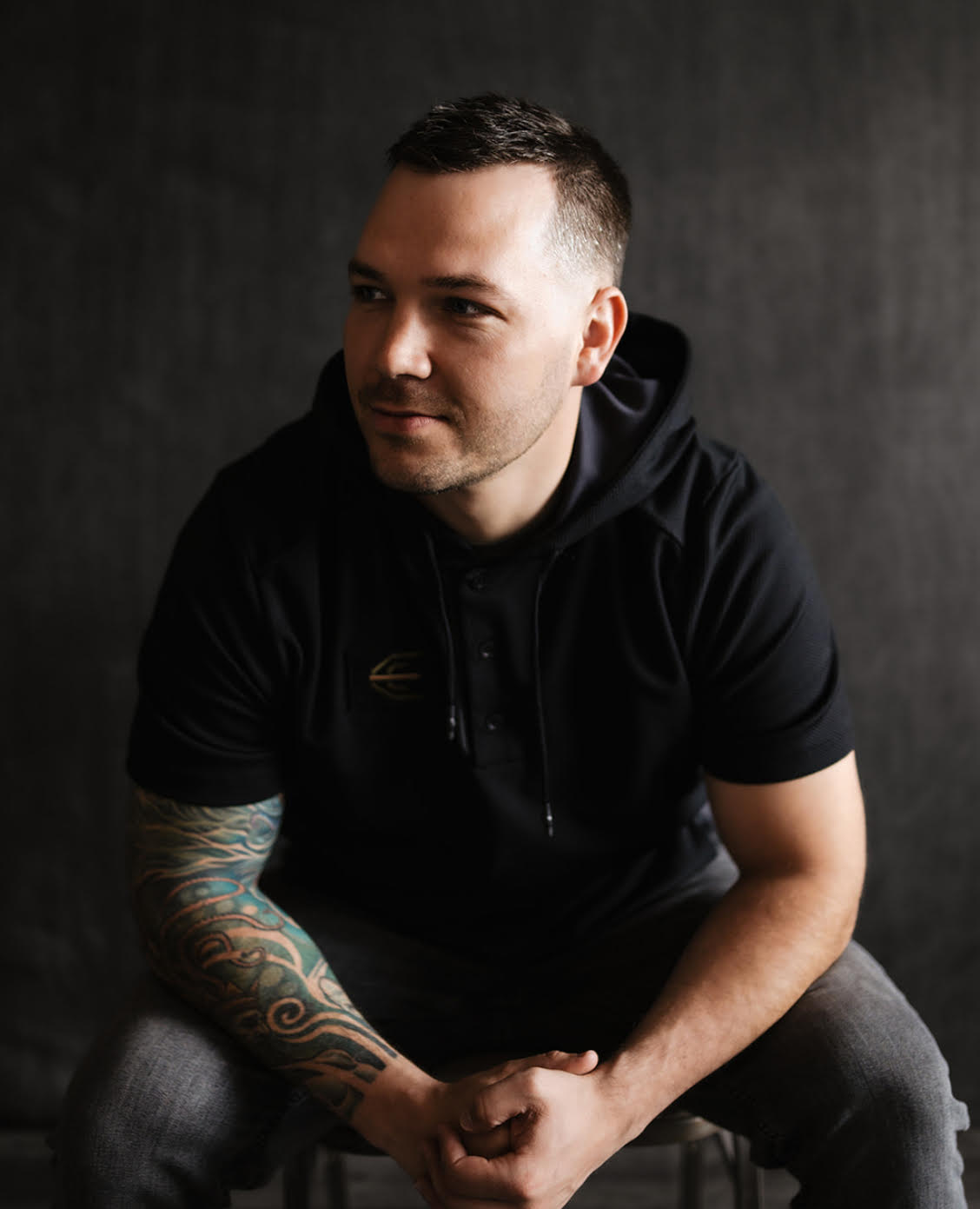
Paul Swanson grew up in Colville, Washington, the kind of small town where perspective is everything. Some kids there believe you can never leave. Others believe if you have a dream, you go after it, no matter how far-fetched. Paul spent most of his early life closer to the first camp than the second.
He was, by his own description, a “too small, too slow” athlete who worked as hard as he could whenever he got the chance, and those chances were rare. He didn’t see real playing time in high school football until his senior season. Wrestling wasn’t much different: plenty of effort, plenty of falling short of the goals he’d set for himself. It became a pattern he almost accepted.
At 18, he enlisted in the U.S. Army and spent his birthday finishing basic training at Fort Jackson, South Carolina. He came home to Washington and began his service in the Washington Army National Guard, eventually competing nationally in Soldier of the Year competitions and Modern Army Combatives tournaments. By most measures, it was already a strong, stable career.
But somewhere in those years, a different kind of fear took over: not fear of failing, but fear of never trying. Near the end of a six-year enlistment, Paul decided to chase a childhood dream that had no business still being alive, playing Division I college football, at an age when most of his peers were already out of college.
He found his way in through Orange Coast College, a junior college in Costa Mesa, California, arriving with a truck, a U-Haul, and not much else. He slept in that truck for the first week before finding a roommate. What followed was a stretch most people would have quit halfway through: discovering he needed an Associate’s degree to transfer as a non-traditional recruit, realizing he was dramatically short on credits with one semester to make it work, taking condensed courses across multiple campuses, and doing it all after the bank repossessed his truck. His own junior college coach told him to be realistic and look at Division II or III instead. Paul kept going anyway, splitting his time between the bus, the library, the gym, and a friend’s couch.
It worked. In August 2015, he got his first Division I phone call. Arkansas State’s defensive coordinator, Joe Cauthen, offered him a spot in Jonesboro, Arkansas. Two years later, Paul left with two Sun Belt Conference championship rings, two bowl game appearances, and a bachelor’s degree.
After graduation, Paul went back into coaching, first as a high school wrestling coach. He was also contracted by a nationally recognized sports psychology company, and it didn’t take long to see the gap in that work: athletes and performers don’t just need sport-specific mindset training, they need and require real mental health understanding too. Becoming a father changed the shape of what came next, and it’s part of what gave him the confidence to return to the Washington Army National Guard as an Officer Candidate. He commissioned as an Infantry Officer in September 2021.
That same period sent him back to school for a master’s in Clinical Mental Health Counseling, with clinical training that included a placement at Gonzaga University Athletics. The realization from his sports psychology work, that performance and mental health can’t be separated, is what Cause & Effect Institute is built on.
Paul now holds an LMHCA credential in Washington State, practicing under the supervision of Jonathan Douglas, MS, LMHC, NCC, and is a CMPC Candidate through the Association for Applied Sport Psychology. He splits his work into two lanes on purpose. Counseling is licensed clinical care. Performance consulting is coaching. They use different tools and follow different rules, and he keeps them separate so each one stays what it’s supposed to be. What connects them is the same underlying belief: your outcomes are the effect of causes you can actually work with.
As a father, Paul is especially driven to give the next generation of athletes, particularly kids coming from small towns like the one he grew up in, the tools to set bold goals, overcome adversity, and lead with confidence on and off the field.
Paul lives in North Idaho with his family, where Cause & Effect Institute is based.